

Advanced Proteomics Facility
Scope
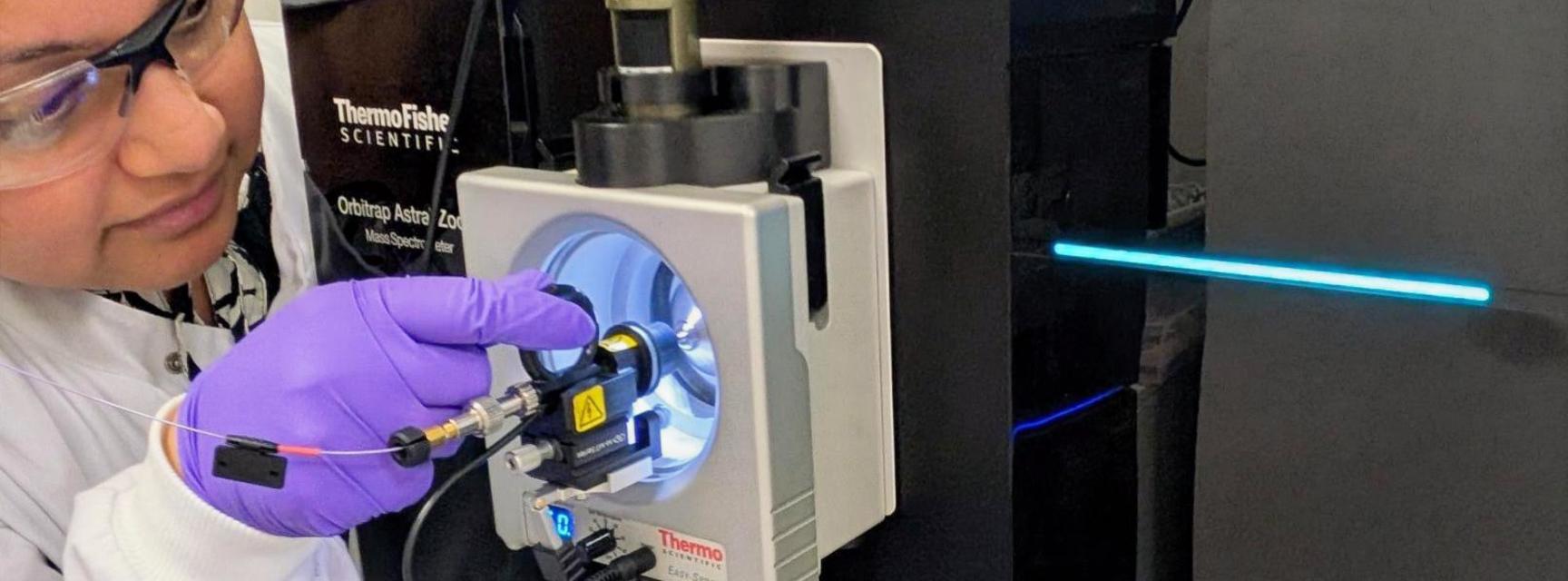
We are a team of expert scientists combining cutting-edge mass spectrometry and proteomics with collaborative research to advance biological knowledge and mentoring the next generation of scientists.
Our expertise
We provide mass spectrometry analysis for the identification and quantification of proteins in complex biological samples. Our capabilities include functional proteomics, and in-depth characterisation of post-translational modifications (PTMs), including phosphorylation, acetylation and ubiquitylation.
Our academic expertise allows us to constantly evolve methods and introduce new technologies and services. We do support research projects all the way from sample preparation to bioinformatics analysis of mass spectrometry and proteomics datasets.
Our scientific community
Our facility supports a diverse base of users from internal Oxford University to external UK and international academics, and commercial users.
Marjorie Fournier
Research Facility Manager

Vaishnavi Ravikumar
Research Associate

Our academic team
Director: Weston Struwe, www.bioch.ox.ac.uk/research/struwe
Deputy director: Faraz Mardakheh, www.bioch.ox.ac.uk/research/mardakheh
Instrument upgrade this winter 2025
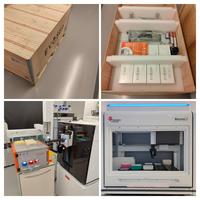
28 Oct 2025 & 19 Nov 2025 - Installation of the Evosep Eno and Biomek i5 (Beckman Coulter).
Thanks to generous EPA cephalosporin fund, we have added a new liquid chromatography system and a sample handling robot to our facility. Together, these instruments will automate sample preparation for mass spectrometry analysis and significantly increase our throughput.
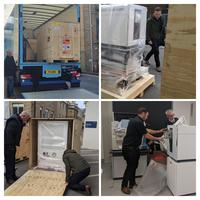
26 Sept 2025 - Our new Astral Zoom mass spectrometer has been installed !
Supported by the Wolfson Foundation and the John Fell Fund, the facility has achieved a significant instrumentation upgrade with the acquisition of a Thermo Fisher Scientific Neo Vanquish LC system and a next-generation Astral Zoom mass spectrometer. Our department was the first Astral Zoom installation site in the UK.
The facility is equipped with a wide range of mass spectrometry instrumentation coupled with liquid chromatography systems (LC-MS) and an automated sample preparation device. Overall, our instruments provide a robust platform for the rapid and sensitive analysis of complex biological samples.
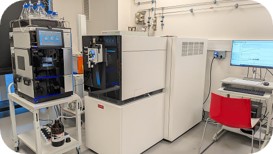
Astral Zoom coupled with Vanquish Neo is our recent addition to the facility. This Orbitral Astral Zoom next generation mass spectrometer is capable of high sensitivity data-independent acquisition (DIA) for thousands of proteins in minutes scale gradients. The Astral Zoom is moreover equipped with a FAIMS source to enhance signal-to-noise ratio and ions filtering for specific applications such as detection of low abundant proteins and cross-linking mass spectrometry.
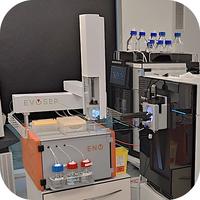
Evosep Eno is a recently acquired LC system coupled with the Astral Zoom. This instrument is used for standard proteomics analysis and high-throughput analysis with a sample capacity up to 500 samples per day for targeted analyses.
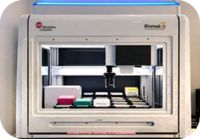
Biomek i5 for automated sample preparation. This sample preparation robot enables automated sample preparation for high-throughput sample processing and enhanced reproducibility.
QExactive coupled with Ultimate 3000 RSLC. This Orbitrap LC-MS platform is dedicated to the analysis of routine protein samples as well as complex samples. Our facility is equipped with 3 QE-LC MS systems.
LTQ XL is an ion trap mass spectrometry instrument dedicated to low complexity sample analysis and training on basics of tandem mass spectrometry.
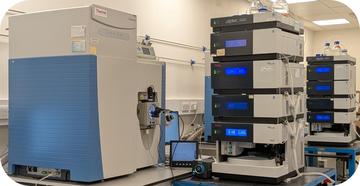
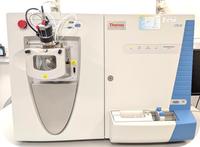
Our facility provides comprehensive proteomics services, ranging from routine protein identification to advanced biological sample analysis, with a focus on functional analyses to elucidate molecular mechanisms of cellular processes.
Our team offers end-to-end proteomics support—from sample preparation to data analysis—or tailored training for specific project steps.
Beyond our standard services portfolio, we welcome collaborations on advanced proteomics projects and the development of novel methodologies.
Services
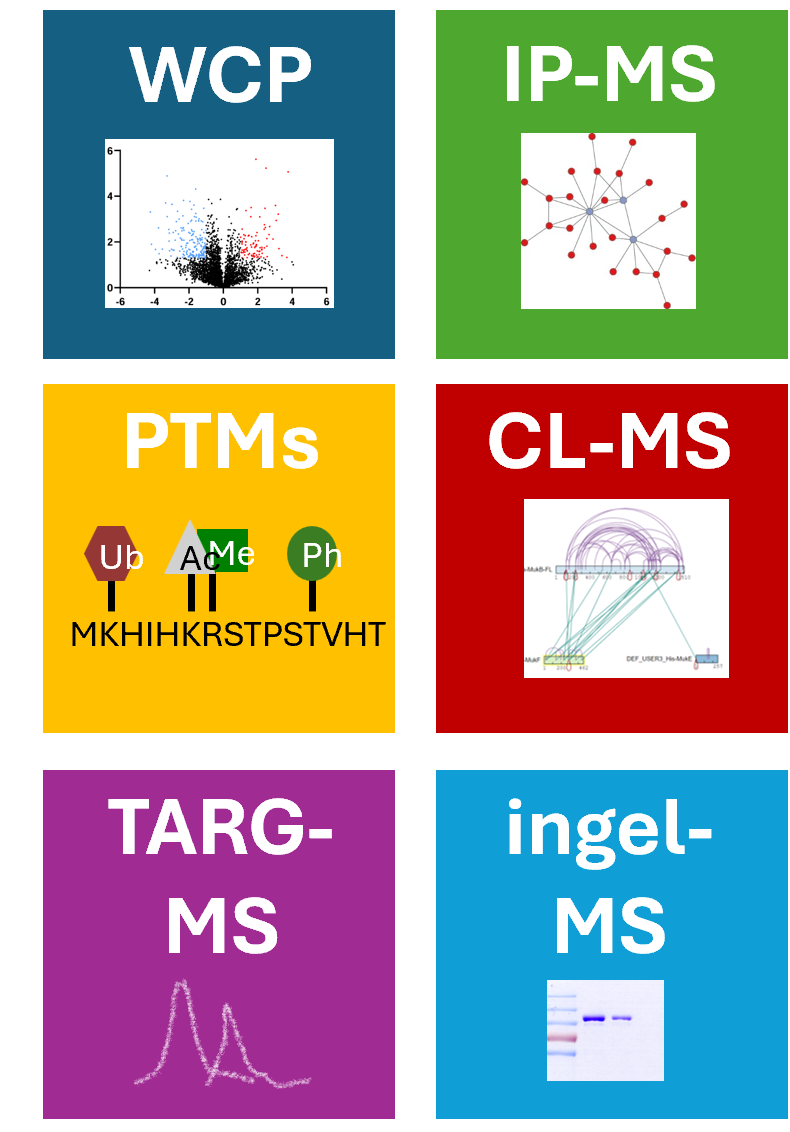
1. Whole cell proteomics (Shotgun Proteomics, WCP) Comprehensive and untargeted identification and quantification of thousands of proteins from cell lysates, tissues, or fluids.
2. Interactome analysis (IP-MS) Unbiased identification of protein-protein interaction from affinity purified protein samples.
3. Post-translational analysis (PTMs) Mapping of post-translational modifications (phosphorylation, acetylation, ubiquitylation) on purified proteins or whole proteins from the cell.
4. Cross-linking mass spectrometry (CL-MS) Analysis of 3D arrangement of protein complexes or changes in protein-complexes conformation or mapping of protein-protein interaction domain.
5. Targeted analysis (TARG-MS) Identification and quantification of specific analytes within complex protein mixtures.
6. In gel-mass spectrometry (gel-MS) Identification from unknown protein gel band.
Training
We love sharing our passion for mass spectrometry and proteomics, so please reach out if you would like to develop your expertise and expand your skill set in this area.
We offer training in sample preparation and mass spectrometry data analysis, alongside instrument access for trained operators and super users.
Project Timeline
High-quality proteomics relies on robust experimental design and high-quality sample preparation.
We recommend the following practical steps, starting with discussing your project to help design the most effective proteomics workflow for your study:
Step 1. Contact the facility
For inquiries regarding project scope, experimental design, and associated costs, please contact Marjorie Fournier at marjorie.fournier@bioch.ox.ac.uk.
Step 2. Sample Submission
Please see our Proteomics submission form of the intranet - please note that this link will require an Oxford SSO login.
Step 3. Discuss your results
Please do reach out for support in analysing your results, interpreting data, or determining follow-up steps.
External Work
If you are a commercial organisation and are interested in the services or expertise of the Advanced Proteomics Facility, we would encourage you to contact our colleagues at Oxford University Innovation (OUI) (contact: Lucy.Silvey@innovation.ox.ac.uk) to discuss how we may be able to support you.
Project turnover
Project turnover vary based on experiment complexity, required services and sample volume. The average turnover for sample processing is:
Routine sample analysis : 8-10 days
Complex proteomics analysis : 3-4 weeks
Pricing
Service fees are broken down by service type: sample preparation, LC-MS/MS analysis, data processing, and training. Final costs are tailored to your specific experimental design and requirements, with a detailed quote provided following an initial consultation.
It is important to note that user fees are designed to recover operating expenses of the facility such as consumables and instrument service contracts.

See our departmental policy about Recognition of Small Research Facility Contributions:
Our SRFs are run by highly skilled scientists who are experts in their specialised fields. They can contribute to numerous areas such as experimental design, sample preparation, data acquisition, data analysis and manuscript drafting and review.
SRF staff contributions must be recognised in manuscripts, posters, conference proceedings and other outlets, just as any other co-authors would be. Giving credit to staff is important for their career development and also helps to raise the profile of the SRFs and generate further collaborations and funding opportunities.
Selected publications:
2026
Assembly of two functionally-distinct protein import complexes in the outer membrane of plant chloroplasts. Nellaepalli S, Baretić D, Brandner AF, Kubis-Waller S, Xu D, Soufi Z, Cheng S, Kodru S, Fang J, Flores-Pérez Ú, Ravikumar V, Pulido P, Fournier M, Ahel I, Khalid S, Jarvis RP. Nat Comm. PMID: 42010247.
2025
The cytoplasmic domain of the pseudoprotease iRhom2 mediates distinct signaling mechanisms to control activation of the cell surface protease ADAM17. Lu F, Fournier M, Freeman M. J Biol Chem. PMID: 40885391.
DSIF factor Spt5 coordinates transcription, maturation and exoribonucleolysis of RNA polymerase II transcripts. Kuś K, Carrique L, Kecman T, Fournier M, Hassanein SS, Aydin E, Kilchert C, Grimes JM, Vasiljeva L. Nat Commun. PMID: 39746995.
A new paradigm for outer membrane protein biogenesis in the Bacteroidota. Liu X, Orenday Tapia L, Deme JC, Lea SM, Berks BC. Nature. PMID: 41034578.
2023
Disrupted propionate metabolism evokes transcriptional changes in the heart by increasing histone acetylation and propionylation. Park KC, Crump NT, Louwman N, Krywawych S, Cheong YJ, Vendrell I, Gill EK, Gunadasa-Rohling M, Ford KL, Hauton D, Fournier M, Pires E, Watson L, Roseman G, Holder J, Koschinski A, Carnicer R, Curtis MK, Zaccolo M, Hulikova A, Fischer R, Kramer HB, McCullagh JSO, Trefely S, Milne TA, Swietach P. Nat Cardiovasc Res. PMID: 38500966.
Ubiquitin-based pathway acts inside chloroplasts to regulate photosynthesis. Sun Y, Yao Z, Ye Y, Fang J, Chen H, Lyu Y, Broad W, Fournier M, Chen G, Hu Y, Mohammed S, Ling Q, Jarvis RP. Sci Adv. PMID: 36383657.
The cellular response to ocean warming in Emiliania huxleyi. Dedman CJ, Barton S, Fournier M, Rickaby REM. Front Microbiol. PMID: 37256052.
Cerebrospinal Fluid and Brain Proteoforms of the Granin Neuropeptide Family in Alzheimer's Disease. Quinn JP, Ethier EC, Novielli A, Malone A, Ramirez CE, Salloum L, Trombetta BA, Kivisäkk P, Bremang M, Selzer S, Fournier M, Das S, Xing Y, Arnold SE, Carlyle BC. J Am Soc Mass Spectrom. PMID: 36912488.
2022
KAT2-mediated acetylation switches the mode of PALB2 chromatin association to safeguard genome integrity. Fournier M, Rodrigue A, Milano L, Bleuyard JY, Couturier AM, Wall J, Ellins J, Hester S, Smerdon SJ, Tora L, Masson JY, Esashi F. Elife. 2022 doi: 10.7554/eLife.57736.
The C-Terminal Domains of the PB2 Subunit of the Influenza A Virus RNA Polymerase Directly Interact with Cellular GTPase Rab11a. J Virol. PMID: 35019720.
Alkaline nucleoplasm facilitates contractile gene expression in the mammalian heart. Hulikova A, Park KC, Loonat AA, Gunadasa-Rohling M, Curtis MK, Chung YJ, Wilson A, Carr CA, Trafford AW, Fournier M, Moshnikova A, Andreev OA, Reshetnyak YK, Riley PR, Smart N, Milne TA, Crump NT, Swietach P. Basic Res Cardiol. PMID: 35357563
CDK9 and PP2A regulate RNA polymerase II transcription termination and coupled RNA maturation. Tellier M, Zaborowska J, Neve J, Nojima T, Hester S, Fournier M, Furger A, Murphy S. EMBO Rep. PMID: 35980303
Invariant surface glycoprotein 65 of Trypanosoma brucei is a complement C3 receptor. Macleod OJS, Cook AD, Webb H, Crow M, Burns R, Redpath M, Seisenberger S, Trevor CE, Peacock L, Schwede A, Kimblin N, Francisco AF, Pepperl J, Rust S, Voorheis P, Gibson W, Taylor MC, Higgins MK, Carrington M. Nat Commun. PMID: 36038546.
2021
Acyl carrier protein promotes MukBEF action in Escherichia coli chromosome organization-segregation. Prince JP, Bolla JR, Fisher GLM, Mäkelä J, Fournier M, Robinson CV, Arciszewska LK, Sherratt DJ. Nat. Commun. PMID: 34795302.

